Patricia Tapia @ptcervantes Mon, June 8, 2026, 5:55 AM. Industry in the neighboring country believes that preserving the treaty is essential to maintaining investment, employment, and manufacturing competitiveness.
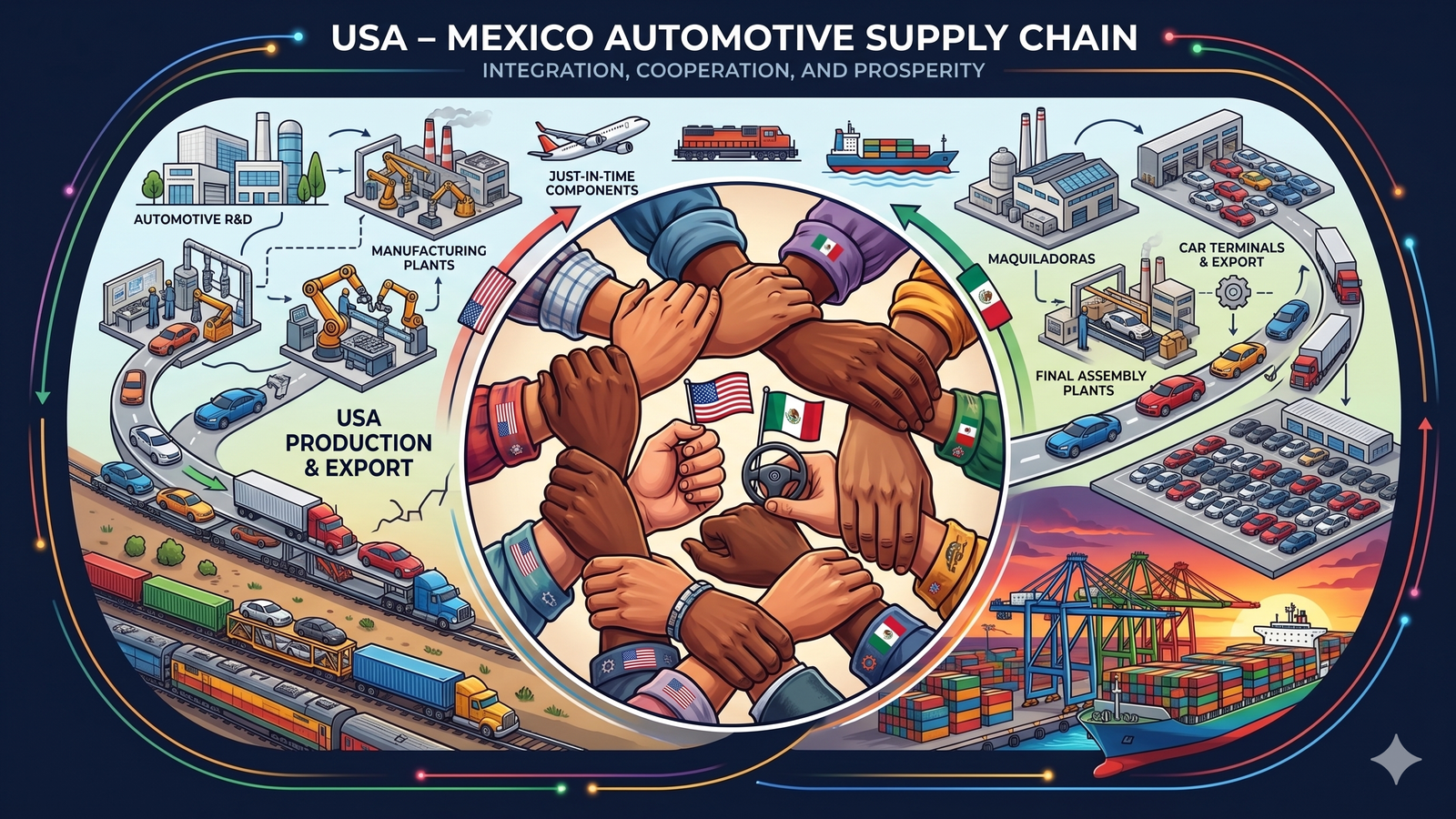
Every day, millions of dollars' worth of components manufactured in the United States cross the border into Mexico. There, they undergo assembly, integration, or specialized processing. Hours later, they begin their journey back to be incorporated into products that end up in U.S. factories, warehouses, and distribution centers.
For Amphenol, a company with over a century of history dedicated to manufacturing interconnect systems for sectors ranging from defense to aerospace, this movement is part of the routine. Its U.S.-made components travel to Mexican plants, where they are integrated into assemblies that return to the U.S. market.
The company reports that it moves millions of dollars' worth of components across the border every day in a seamless process.
Hundreds of miles away, CNH, a manufacturer of agricultural and construction machinery, faces a similar reality. The company relies on components produced in various parts of North America. Among them are electrical harnesses manufactured in Mexico, an essential part for the automotive and heavy equipment industries.
The story is repeated at Albany International. The company produces industrial textiles and components for the aerospace industry. Many of its products leave the United States, cross into Mexico for specialized processing, and then return to supply customers throughout the continent.
The extent of this dependence is revealed in a figure that often goes unnoticed amidst debates about tariffs and international competition.
According to information from the National Association of Manufacturers (NAM), 64% of everything the United States buys from Mexico consists of industrial materials, parts, components, machinery, and equipment that end up in manufacturing processes within U.S. territory. In other words, almost two out of every three dollars that Washington spends on Mexican purchases first reach factories, and not directly consumers.
This data helps explain why Mexico has become a difficult partner to replace.
Mexico Displaces China
For years, China held a dominant position within U.S. supply chains. However, that dynamic has changed rapidly.
Between 2018 and 2025, U.S. imports from Mexico grew by 55%, while purchases from China fell by 43%, according to official figures. The value of manufactured inputs that the United States receives from North America is more than three times greater than that from the Asian giant.
This transformation is due to a combination of factors: trade tensions between Washington and China, post-pandemic logistical disruptions, and the need for more resilient supply chains have prompted numerous companies to bring production and suppliers closer to home.
But Mexico offers an advantage that China can hardly replicate.
Goods produced in Mexico for export to the United States typically incorporate around 40% U.S. content and another 25% Canadian inputs. In contrast, imports from China contain only 4% U.S. components. This means that when the United States buys Mexican manufactured goods, it also generates economic activity, employment, and demand for suppliers located within its own borders.
Imports from Asia are growing
Mexico's increasing presence in U.S. supply chains is also sparking a discussion that is becoming increasingly relevant for the region. An analysis by the Legislative Observatory of Global Affairs of the Mexican Chamber of Deputies indicates that while Mexican exports to the United States are gaining ground, imports from Asia are advancing rapidly. Between 2016 and 2025, Mexican purchases from China increased by 92%, while those from Vietnam grew by 457%, rising from $4 billion to $22.4 billion.
This trend gained momentum following the trade war between the United States and the Asian giant. Since then, Mexico has increased its exports to the United States, but has also increased its imports of Asian inputs to supply its manufacturing chains. This phenomenon is fueling a debate that is already emerging in Washington. Is Mexico increasingly producing regional content, or is it functioning as a platform that incorporates foreign components before exporting finished goods?
For U.S. manufacturers, the answer points to increasingly deeper North American integration, as the high U.S. and Canadian content of Mexican exports shows that much of that economic activity remains within the region.
https://expansion.mx/economia/2026/06/08/mexico-irreemplazable-eu-fabricas-exportaciones