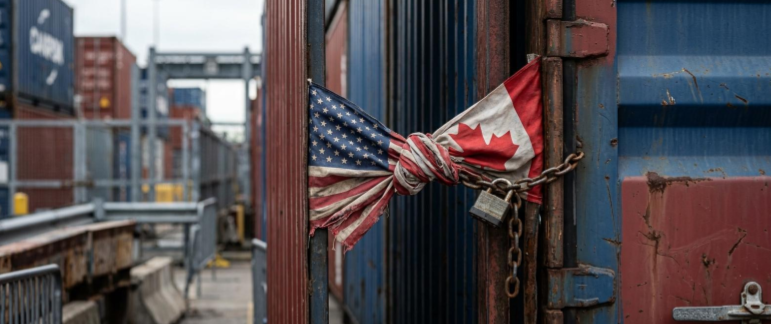
For decades, North American diplomacy sought to reduce friction among partners. Now, dialogue increasingly coexists with pressure. This shift is not incidental; rather, it reflects the spirit of the times in U.S. trade policy.
A prime example occurred during the closing ceremony of the FIFA World Cup. Trump appeared alongside Sheinbaum and Canadian Prime Minister Mark Carney. Three North American leaders shared the stage at the largest sporting event ever jointly organized by their countries, projecting an image of unity to a global audience.
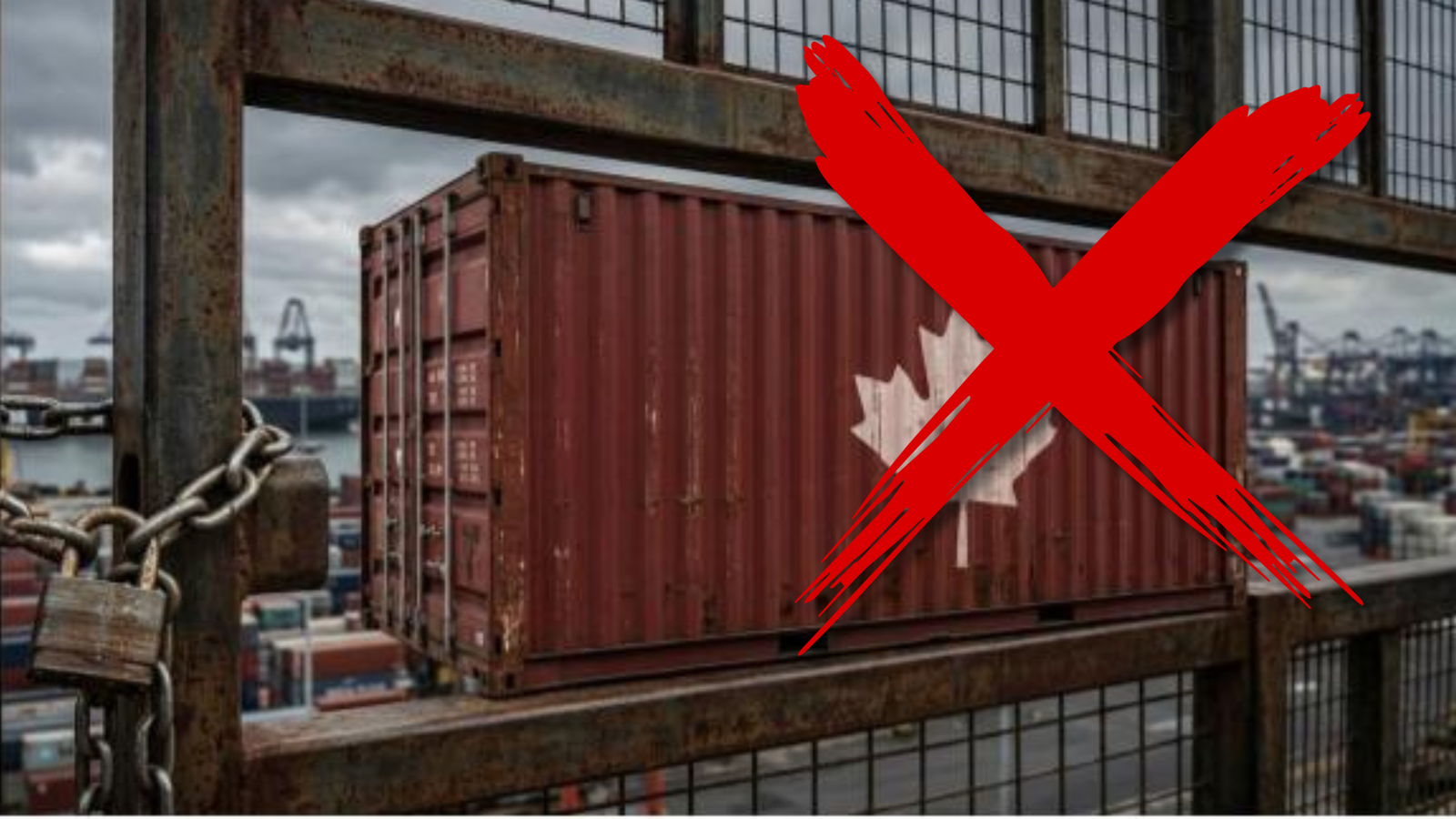
However, hours later, Washington announced a new 50% tariff on a wide range of Canadian exports. This decision demonstrated that Canada is not participating in trade negotiations for a de facto integrated North American market.
Mexico receives mixed signals as the Agreement is Revised
Mexico also received its own reminder. When Ismael “El Mayo” Zambada was sentenced to life in prison, DEA Administrator Terry Cole declared that the sentence was “just the beginning,” pledging to continue pursuing not only Mexican cartel leaders but also the corrupt officials who facilitate them.
These decisions underscore not just a new era but a new paradigm for bringing the other side to the table. Officials who have worked with U.S. authorities under both Republican and Democratic administrations report an unprecedented sense of entitlement in Washington.
The relationship with Canada has turned notably sour. Mexico, in contrast, continues to be viewed as a partner worth engaging with—not because disagreements have vanished, but because Washington believes progress remains possible.
Bilateral Strategy as Opposed to Trilateral Focus
Trade Representative Greer indicated that he expects to present proposals to President Trump and the other North American leaders before the end of the year. More revealing than the timeline was the negotiating framework: one arrangement with Canada and another with Mexico.
Washington views North America not as a single trilateral negotiation but as two distinct bilateral relationships, each governed by different political calculations. This fragmented approach represents a significant shift from the original spirit of the USMCA.
Conversations increasingly reflect the assumption that the United States sets the terms while its partners adjust accordingly. The language is less that of allies pursuing common interests than that of a power convinced that its market and geopolitical weight entitle it to define the rules.
Keeping Leverage
The ultimate goal of the new Washington is not merely to secure concessions, but to preserve the leverage that facilitates extracting future concessions. This distinction is fundamental to understanding the current dynamic.
Some observers expect the USMCA review to conclude next year. However, Washington's political logic increasingly points in a different direction. For an administration that treats leverage as a strategic asset, there is little incentive to rush toward a final, conclusive agreement.
Outstanding issues in the trade agreement review include:
- Rules of origin for the automotive industry
- Non-discriminatory access to the Mexican electricity market
- Links to organized crime and fentanyl trafficking
- Migration policy as a negotiating factor
- Concerns regarding Chinese competition in the region
Implication for Mexican Companies
Keeping the review process open preserves flexibility and allows the United States to link trade negotiations to a broader range of concerns. This creates prolonged uncertainty for Mexican companies that rely on cross-border trade.
The Secretariat of Economy has maintained that Mexico will seek to defend its national interests during the negotiations, particularly in strategic sectors such as energy. However, the new paradigm of constant pressure necessitates an adjustment of expectations regarding the final outcome.
For decision-makers in Mexico, the key will be to develop strategies that work in both rapid-agreement scenarios and contexts of protracted negotiation, where any given trade issue can be linked to broader political considerations.