The Canadian automotive industry is facing significant uncertainty driven by global trade tensions, tariffs, and potential changes to the Canada–United States–Mexico Agreement (CUSMA). A 2025 KPMG Canada Consumer Automotive Survey highlights growing concerns among Canadians about vehicle affordability, domestic manufacturing, and the long-term stability of the industry. The findings reveal shifting consumer priorities and strong public support for policies that protect Canadian jobs, strengthen supply chains, and position Canada as a leader in electric vehicle (EV) and battery production.
Consumer Demand and Affordability Concerns
The survey shows that demand for new vehicles remains strong, with 61 percent of Canadians planning to purchase a new car within the next five years. However, affordability is a major concern. Most consumers are price-sensitive, with 62 percent unwilling to spend more than $50,000 on a new vehicle and nearly a quarter limiting their budget to under $30,000.
Trade uncertainty plays a central role in these concerns. More than three-quarters of respondents worry that ongoing tariffs and trade tensions will make new vehicles unaffordable, and many believe further price increases could push them out of the market entirely.
Importance of Domestic Manufacturing and Brand Trust
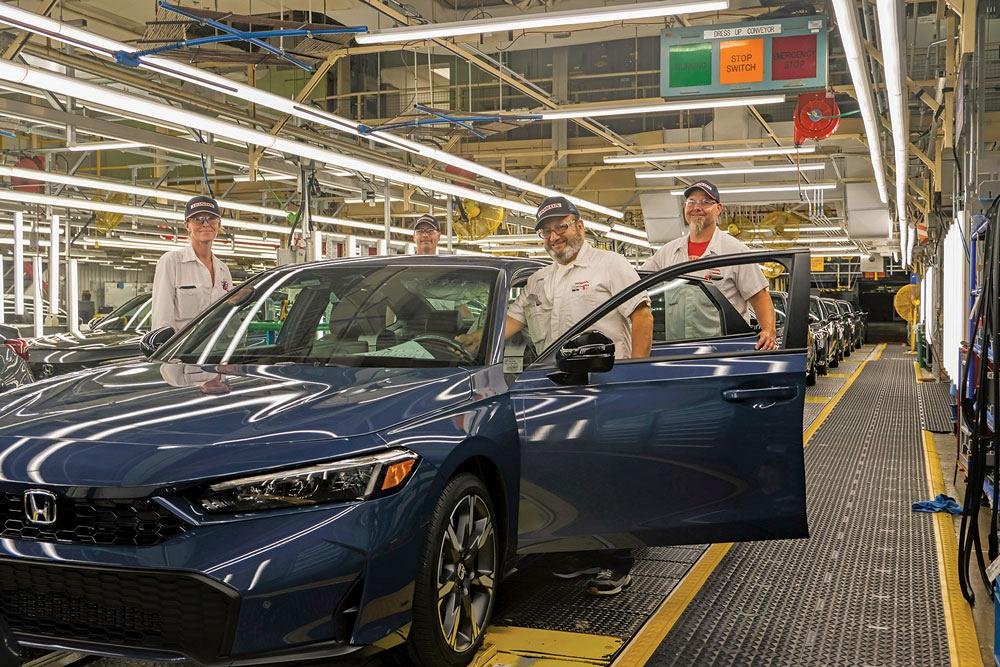
While price and brand trust remain the top factors influencing purchasing decisions, Canadians are increasingly attentive to where vehicles are manufactured. Seventy-two percent say it is important that their vehicle is assembled or built in Canada. Automakers with strong manufacturing footprints in Ontario, such as Toyota and Honda, resonate more positively with consumers.
In contrast, trust in the Detroit 3 automakers is declining, as many Canadians perceive reduced commitment to maintaining jobs in Canada due to U.S. trade pressures and shifting production south of the border.
Shifting Expectations for Government Support
Canadians strongly favor a long-term automotive strategy focused on domestic capacity and resilience rather than short-term subsidies. Only a small share believe continued government support should prioritize the Detroit 3. Instead, consumers want funding directed toward Canada’s auto parts supply industry, diversification into defence manufacturing, and sectors where Canada can be more competitive.
A majority also support the use of tariffs on domestic automakers that relocate production to the United States, reflecting growing public concern about job security and economic sovereignty.
Preparing for a Post-CUSMA Environment
With CUSMA scheduled for review, nearly three-quarters of Canadians fear that losing trade protections would lead to higher vehicle prices. Over half believe Canada’s automotive industry cannot survive without trade protections or a new agreement with the U.S.
While changes to rules of origin could disrupt existing supply chains and raise costs, they may also create opportunities for Canadian manufacturers to expand, diversify, and reduce reliance on overseas suppliers.
Electric Vehicles and Battery Production as a Strategic Opportunity
The survey identifies strong support for Canada becoming a global leader in EVs and battery production. More than half of respondents believe this transition could reduce dependence on the U.S. auto industry and protect domestic jobs. Canadians also support investments in charging infrastructure and the inclusion of plug-in hybrids in EV mandates.
Although interest in environmentally friendly vehicles is high, consumers remain cautious about affordability and show declining trust in EVs produced by major technology companies.
Conclusion:
The 2025 KPMG Canada Consumer Automotive Survey reveals a Canadian public that is deeply concerned about vehicle affordability, trade uncertainty, and the future of domestic manufacturing. Consumers are calling for a comprehensive automotive strategy that prioritizes Canadian production, secures jobs, strengthens supply chains, and accelerates leadership in EVs and battery technologies. As trade pressures intensify and CUSMA faces review, the findings underscore the need for long-term, strategic investments to ensure the resilience and competitiveness of Canada’s automotive industry.
Source: NAPS Intl.