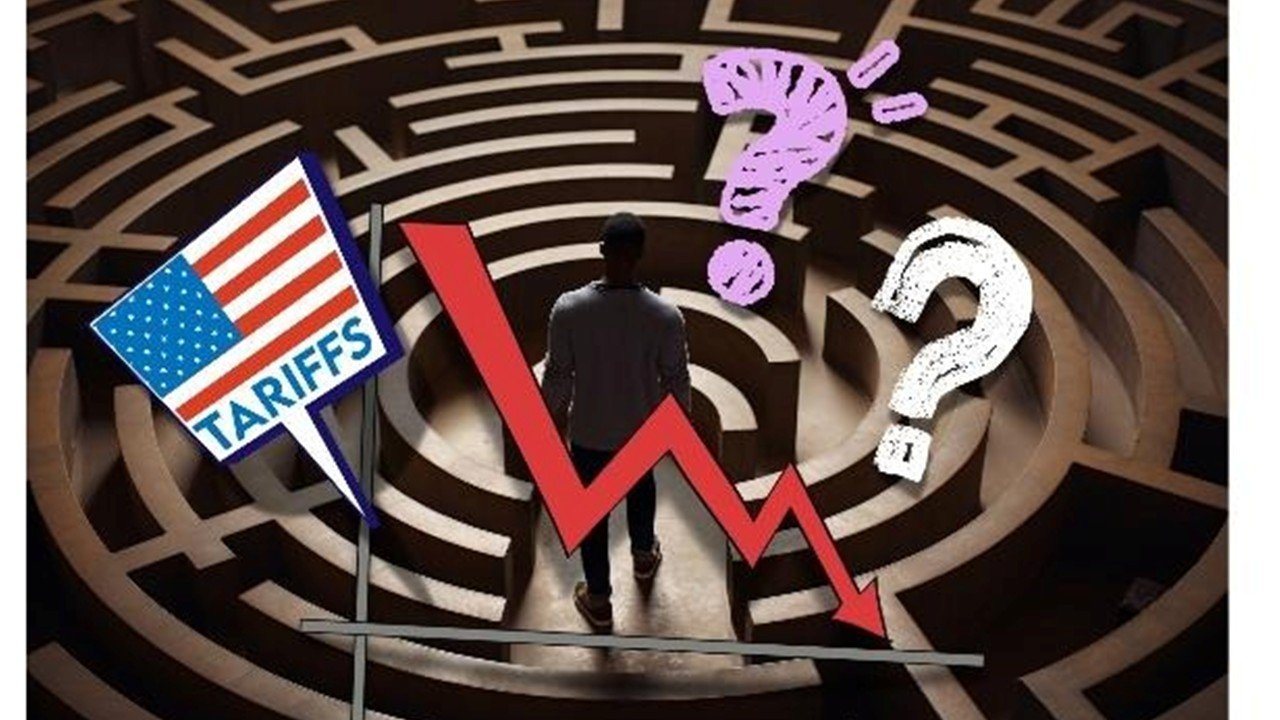
US goods deficit hits record $1.24T despite tariffs—China's automation edges ahead while US hesitates. Can America catch up? Why aren’t tariffs reducing the trade deficit? Click to see the full report.
President Trump is doubling down on his tariffs, even though they have so far failed to achieve one of their key stated goals: rebalancing lopsided global trade. On the contrary, recent data show the tariffs that the Supreme Court struck down on Friday and that Trump has vowed to reimpose under a different statute are cementing these imbalances.
From Berlin to Tokyo, the world’s biggest exporting countries have reacted to U.S. tariffs by further committing to economic policies that support exports, subsidizing manufacturers to help them leap over the tariff wall. As for America, it very much remains the world’s importer of last resort. The U.S. trade deficit in goods rose to a record high of $1.24 trillion in 2025, driven by a 4.3% increase in goods imports, according to data published Thursday by the Census Bureau.
Big exporting countries—Germany, Japan, South Korea, Taiwan and others—have launched government spending programs that are largely tilted toward supporting manufacturers dependent on overseas markets. These aim to lower the cost of energy, transportation and capital, making it cheaper and more efficient for businesses to produce and export goods, partly offsetting the competitiveness hit from the Trump tariffs.
They are among the reasons that global growth and trade flows have held up better than expected over the past 11 months. In Japan, Prime Minister Sanae Takaichi’s recen.t spending lpackage of 21.3 trillion yen, equivalent to $136 billion, came with a high-profile proposal to cut the consumption tax, which could spur Japanese imports. But large parts of the fiscal plan double down on industrial subsidies.
South Korea recently provided 25 trillion won, or about $17.5 billion, in liquidity to exporters to help them bridge the gap caused by tariff shocks. Taiwan provided export-related credit guarantees designed to mitigate tariff shocks and trade turbulence, directly providing credit support to exporters and small and midsize businesses.In Germany, a spending plan amounting to roughly 1 trillion euros, or about $1.2 trillion, is being mainly targeted at supporting manufacturers while Berlin is also subsidizing companies’ energy bills to make them more competitive abroad.
Governments in countries including China, Germany and South Korea have historically regarded foreign surpluses as a source of strength. Consumption-fueled growth is seen, at best, as peculiarly American and, at worst, as decadent. “Many of these countries can’t afford to allow their trade surpluses to come down, so when the costs to export to the U.S. rise, they have to lower the cost domestically,” said Michael Pettis, nonresident senior fellow at the Carnegie Endowment for International Peace.
The subsidies are typically financed by transfers from households, Pettis said, which ultimately reduces domestic demand and consumption further.“They’re all trying to beat each other by lowering wages and subsidizing exports, but if we all do that, total growth will go down, not up,” he said. China’s current-account surplus is expected to reach 4.3% of GDP this year amid surging exports and weak domestic demand, according to Goldman Sachs. Meanwhile, the U.S. current-account deficit is running at about 4% for the latest 12-month period, roughly double its level in 2019.
Excerpted with edits (paywall): https://www.wsj.com/economy/trade/why-tariffs-arent-shrinking-the-u-s-trade-deficit-30a4dd0a
Manufacturing MIT INM Report: https://manufacturingatmit.substack.com/p/manufacturing-update-10-march-2026
.png)