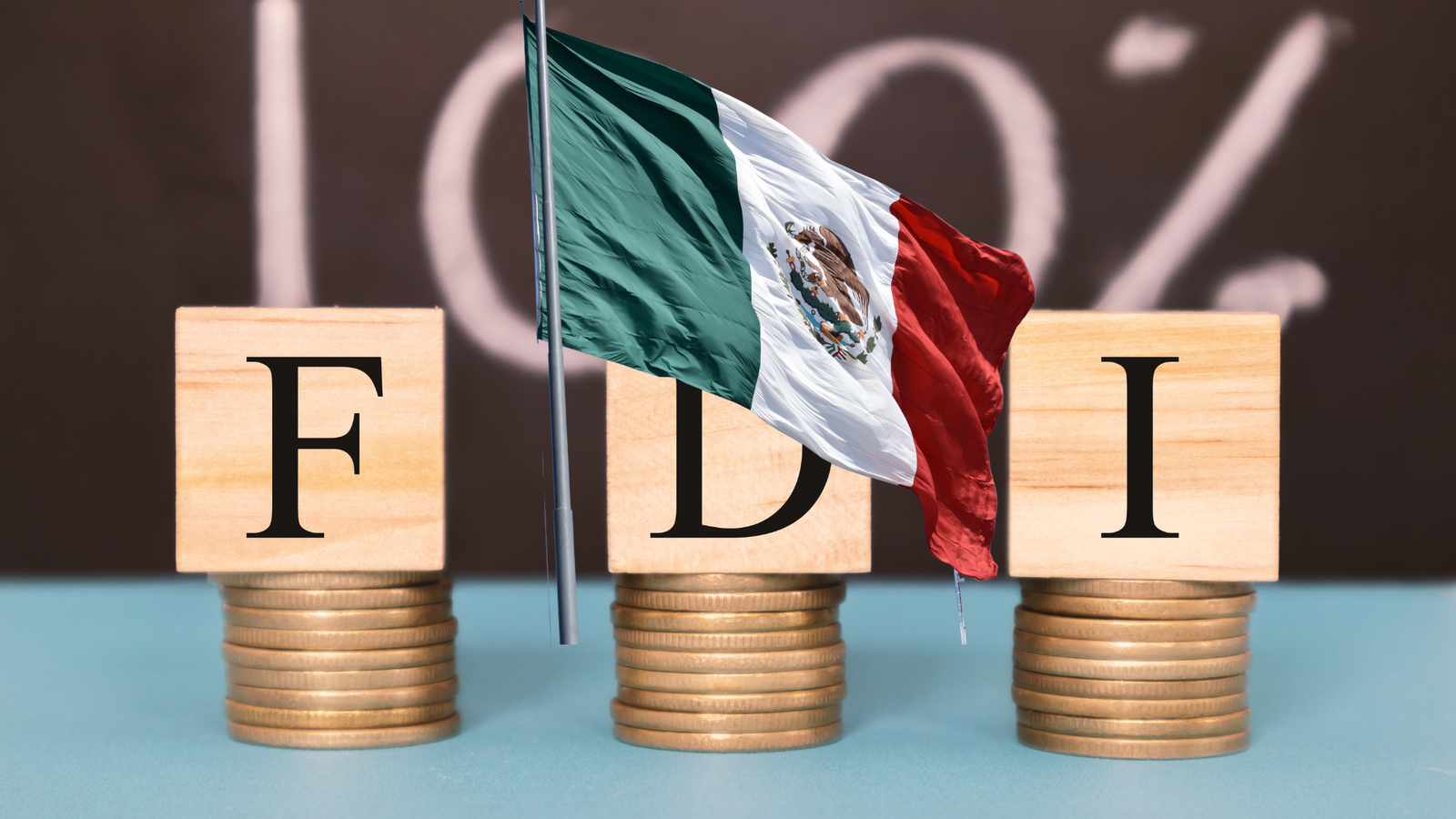
- FDI reached $23,591 million, 10.4% higher than in Q1 2025; with sufficient energy, the potential for nearshoring would be greater.
México, ¿Cómo vamos? May
Mexico registered $23.591 billion in foreign direct investment (FDI) in the first quarter of 2026 (1Q2026), a new all-time high.
Mexico has now seen three consecutive years of positive FDI growth in the first quarter: 9.0% in 2024, 5.2% in 2025, and 10.4% in 2026, compared to the same period of the previous year.
Geopolitical conflicts and the reconfiguration of supply chains present an opportunity for Mexico to capitalize on nearshoring. Given its location, production integration, and access to the North American market, which, according to the IMF, represents approximately 30% of global GDP, Mexico can consolidate its position as a strategic destination for attracting high value-added industries.
By type of investment, FDI was concentrated in reinvested earnings. As of 1Q2026, reinvestment represented 94.2% of the total, amounting to $22.222 billion. New investments followed, accounting for 7.2% and $1.705 billion. Intercompany accounts registered a negative balance of $336 million, equivalent to -1.4% of the total.
Reinvestment of profits grew 33.5% year-on-year, a sign that foreign companies already operating in Mexico maintain their confidence. This component is key to sustaining operations, financing expansion, and reflects favorable prospects for opportunities in Mexico, driven by its trade integration, the talent of its workforce, and its demographic potential.
By country of origin, the United States remains the leading investor in Mexico, accounting for 43.3% of FDI through Q1 2026. It is followed by Spain (16.1%), Australia (6.1%), Japan (4.2%), and Canada (3.8%).
Analyzing the main investors in 2025 highlights the importance of market diversification, with the European Union projected to be Mexico's second-largest investor by 2025, accounting for 25.4% of the total. The modernization of the updated Free Trade Agreement between Mexico and the European Union (EU-Mexico FTA) presents a strategic opportunity not only in terms of tariffs but also in investment.
By state, FDI was concentrated in Mexico City, which attracted 49.9% of the total. It was followed by the State of Mexico (8.4%) and Nuevo León (8.3%).
By sector, manufacturing accounted for 41.2% of FDI through Q1 2026, followed by financial services (29.0%) and mining (12.9%).
North America's economic security requires regional supply chains with greater technological content. Industries such as computer and electronic component manufacturing, vehicle manufacturing, and logistics are key to the USMCA's co-production model, in which components cross regional borders multiple times before becoming finished goods.
By economic activity, computer and electronic component manufacturing stood out, attracting $1.37 billion and growing 58.7% year-over-year compared to Q1 2025. However, vehicle manufacturing was the sector with the highest FDI inflow through Q1 2026, reaching $4.033 billion. MCV launches a new investment indicator to measure whether Mexico is taking advantage of the second wave of nearshoring, driven by the search for regional economic security and the relocation of technology investments.
The annual goal is to attract $10 billion in new investments, equivalent to two projects the size of AWS Mexico Central, to build capabilities in cloud computing, data, artificial intelligence, and machine learning. The quarterly target is $2.5 billion, an amount close to the average of new investments recorded in the first quarters of 2019 to 2021, during the first wave of nearshoring.
FDI Performance through Q1 2026
Mexico registered $23.591 billion in Foreign Direct Investment (FDI) through the first quarter of 2026, the highest amount ever recorded for a first quarter, according to figures originally published by the Ministry of Economy.
This data confirms that Mexico is attractive to foreign investment. Over the past three years, FDI through the first quarter has maintained a positive trajectory: it grew 9.0% in 2024, 5.2% in 2025, and 10.4% in 2026, in each case compared to the same period of the previous year.
FDI by Investment Type
As of Q1 2026, FDI was concentrated in reinvested earnings, representing 94.2% of the total, at US$22.222 billion. New investments totaled US$1.705 billion, equivalent to 7.2%, while intercompany accounts registered a negative balance of US$336 million, subtracting 1.4% from the total.
Reinvested earnings grew 33.5% year-on-year, a sign that foreign companies already operating in Mexico maintain their confidence and continue to expand their capabilities in the country. This component is key to sustaining operations and financing expansion, and also reflects favorable prospects for opportunities in Mexico due to its trade integration, the talent of its workforce, and its demographic potential.
Annual Performance by Investment Type 2019-2025
From an annual perspective, reinvestment of earnings has accounted for the majority of recent FDI flows, while new investments maintain a smaller share. This demonstrates the strength of companies already established in Mexico, but also underscores the challenge of attracting more new capital to fully leverage nearshoring.
New Investments and the Second Wave of Nearshoring
MCV launches a new investment traffic light system to monitor whether Mexico is capitalizing on the second wave of nearshoring, marked by Donald Trump's second term, geopolitical reconfiguration, the search for regional economic security, and the relocation of technology investments.
The traffic light system is based on the following premise: due to its economic structure, geographic location, and integration with North America, Mexico has the potential to build strategic capabilities in technology, cloud computing, data, artificial intelligence, and machine learning.
We identified two phases of nearshoring in Mexico. The first wave, between 2019 and 2021, was associated with the diversification of suppliers from China during Donald Trump's first term and accelerated with the COVID-19 pandemic, which highlighted the need for supply chains closer to the end consumer.
The second wave occurs during Trump's second term, in an environment where regional economic security, technological competition, and the reconfiguration of global trade drive the relocation of investments towards strategic value chains.
What does the cumulative traffic light look like in the fourth quarter?
MCV launches the traffic light system for new investments to monitor whether Mexico is capitalizing on the second wave of nearshoring, marked by Donald Trump's second term, geopolitical reconfiguration, the search for regional economic security, and the relocation of technology investments.
The traffic light system is based on the following premise: due to its economic structure, geographic location, and integration with North America, Mexico has the potential to build strategic capabilities in technology, cloud computing, data, artificial intelligence, and machine learning.
We identified two phases of nearshoring in Mexico. The first wave, between 2019 and 2021, was associated with the diversification of suppliers from China during Donald Trump's first term and accelerated with the COVID-19 pandemic, which highlighted the need for supply chains closer to the end consumer.
The second wave occurs during Trump's second term, in an environment where regional economic security, technological competition, and the reconfiguration of global trade drive the relocation of investments towards strategic value chains.
FDI by Sector
As of Q1 2026, FDI was concentrated primarily in manufacturing industries, accounting for 41.2% of the total. This was followed by financial and insurance services, with 29.0%, and mining, with 12.9%.
The importance of manufacturing confirms Mexico's role in North American production integration. The region's economic security requires value chains with greater technological content, where industries such as computer and electronic component manufacturing, vehicle manufacturing, and logistics are key to the USMCA's co-production model.
By economic activity, the manufacture of computer equipment and electronic components stood out, attracting US$1.37 billion and growing 58.7% year-on-year compared to Q1 2025. However, vehicle manufacturing was the activity with the highest FDI inflow as of Q1 2026, with US$4.033 billion.
Annual Performance by Sector 2008-2025
For the year to date, manufacturing industries are the main destination sector for FDI in Mexico, consolidating their weight in the economy (more than 20% of GDP) and within the North American production integration. The service sector, particularly financial and logistics, also stands out, while construction shows more variable performance over time. It positioned itself as the third largest recipient of FDI in 2025, with a 5% share, the highest since 2018.
FDI by Country of Origin
By country of origin, the United States remains the leading investor in Mexico, accounting for 43.3% of FDI as of Q1 2026. It is followed by Spain (16.1%), Australia (6.1%), Japan (4.2%), and Canada (3.8%).
The concentration of U.S. investment confirms the depth of North American economic integratio
Al analizar los principales inversionistas en 2025, destaca la importancia de la diversificación de mercados con la Unión Europea como segundo inversionista de México en el año, con una participación del 25.4% del total. En especial, la modernización del Tratado actualizado de Libre Comercio entre México y la Unión Europea (TLCUEM) es una oportunidad estratégica no solo en materia arancelaria sino también en inversión.
Para capitalizar esta oportunidad será necesario contar con reglas de origen claras que permitan fortalecer la integración de proveeduría local, traducir el acceso preferencial en nuevos proyectos productivos y diversificar la IED con otros países del bloque.
FDI by State
By state, FDI was concentrated in Mexico City, which received 49.9% of the total. It was followed by the State of Mexico (8.4%) and Nuevo León (8.3%). This territorial concentration of FDI highlights the need for a regional investment attraction strategy. Without strengthening the states' productive capacities in energy, logistics infrastructure, security, and technical talent, FDI could continue to concentrate in already established centers, failing to fully unlock new regional opportunities.
n. In the context of the USMCA and the reconfiguration of supply chains, Mexico has an opportunity to attract more investment from strategic sectors related to advanced manufacturing, logistics, technology, and services.
https://mexicocomovamos.mx/publicaciones/2026/05/ied-alcanza-maximo-historico-en-el-1t2026/
.png)